
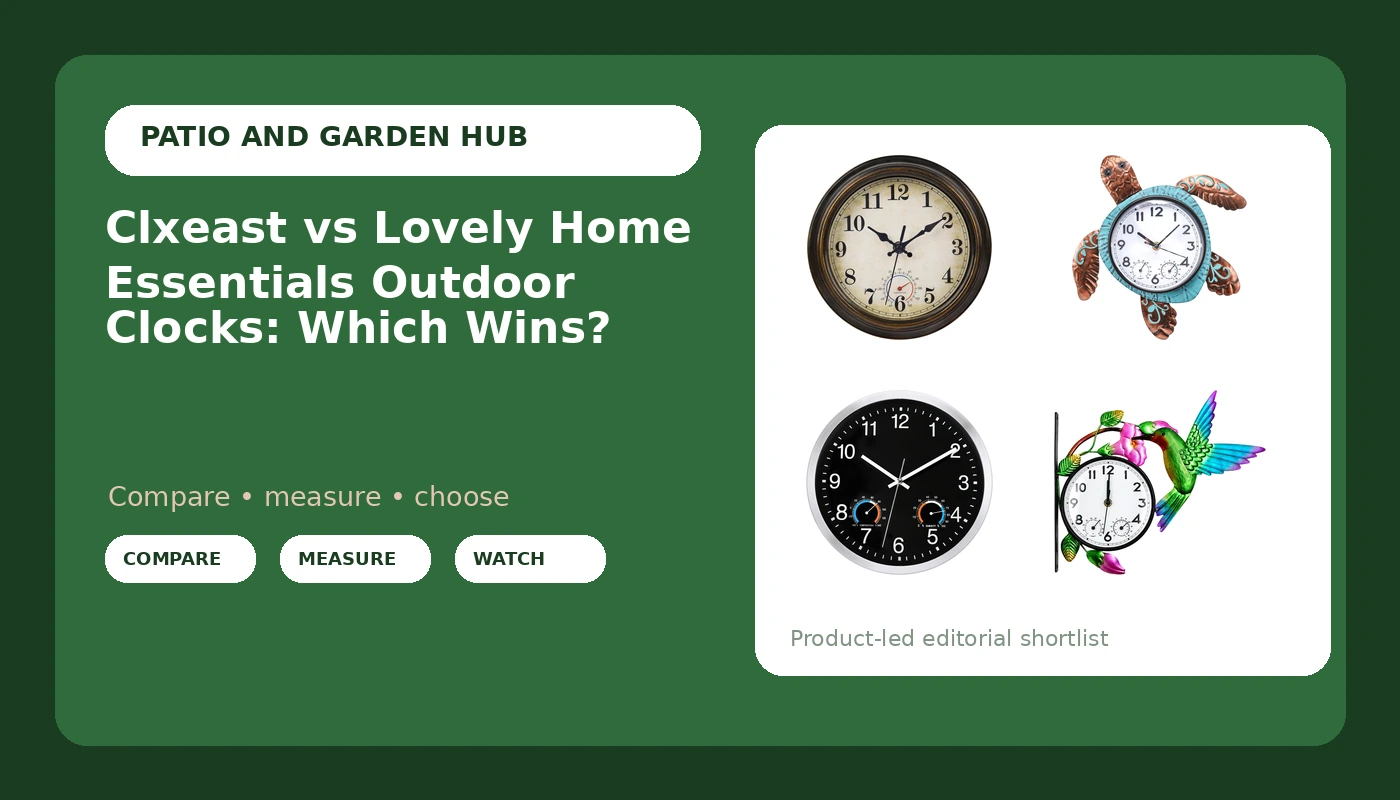
If you are weighing clxeast vs lovely home essentials outdoor clocks, the honest answer is that the label matters less than the dial, the housing, and the wall you plan to hang it on. All four clocks in this comparison are sold as patio-ready pieces, and three of the four carry the word waterproof in the product name, which tells you the category is crowded and the marketing is loud. What actually separates them is size, styling, and how much information the face carries. Get those three right and the clock will still be legible, and still be hanging straight, two summers from now.
The spread here is wider than four products suggests. One is an 8 inch bronze piece styled for a rustic wall and listed for settings as different as a pool deck and a bathroom. One is shaped like a turtle and pitched at gardens. One is a 12 inch black dial with a thermometer built in. The last adds a hygrometer to the thermometer, which is a genuinely different pitch: it wants to tell you about the air, not just the time. The bronze clock sits at the entry end of the group's price range, the Caysie 12 inch sits at the top, and the other two fall in between.
The safest pick for a typical patio is the 12 inch black Caysie clock, because dial size decides whether a clock is readable from a lounge chair, and it has the largest face here. The catch is that it is also the plainest of the four, so it wins on function and gives up character to do it.
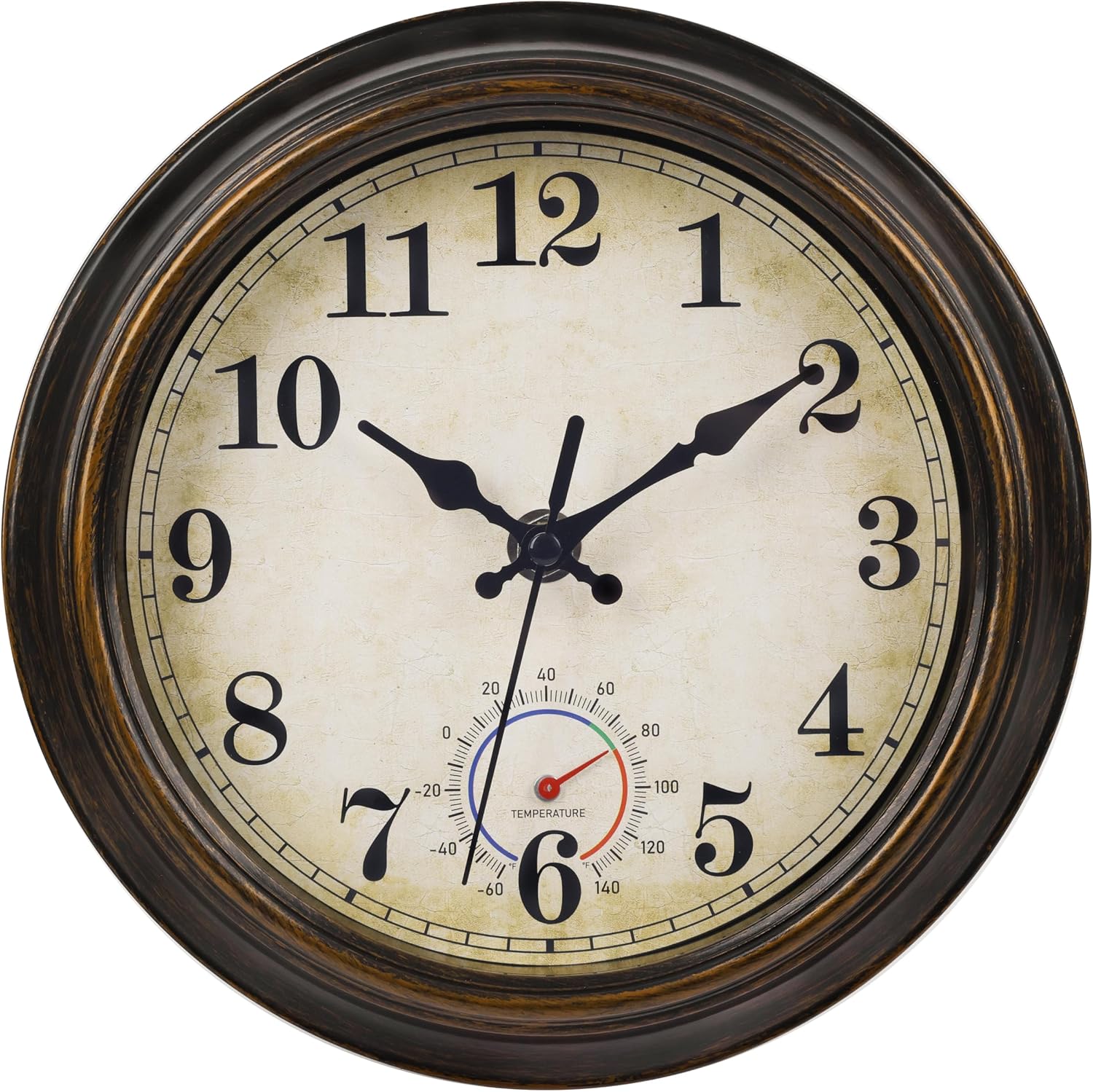
Outdoor Clocks Waterproof with Thermometer Combo Vintage Rustic Wall Clock for Patio Pool Bathroom Kitchen (8 Inch, Bronze)
Smallest dial, so it fits narrow walls and indoor rooms; bronze finish suits brick and timber; thermometer included
8 inches is hard to read from across a patio; the rustic look is a strong flavor that will not suit every wall
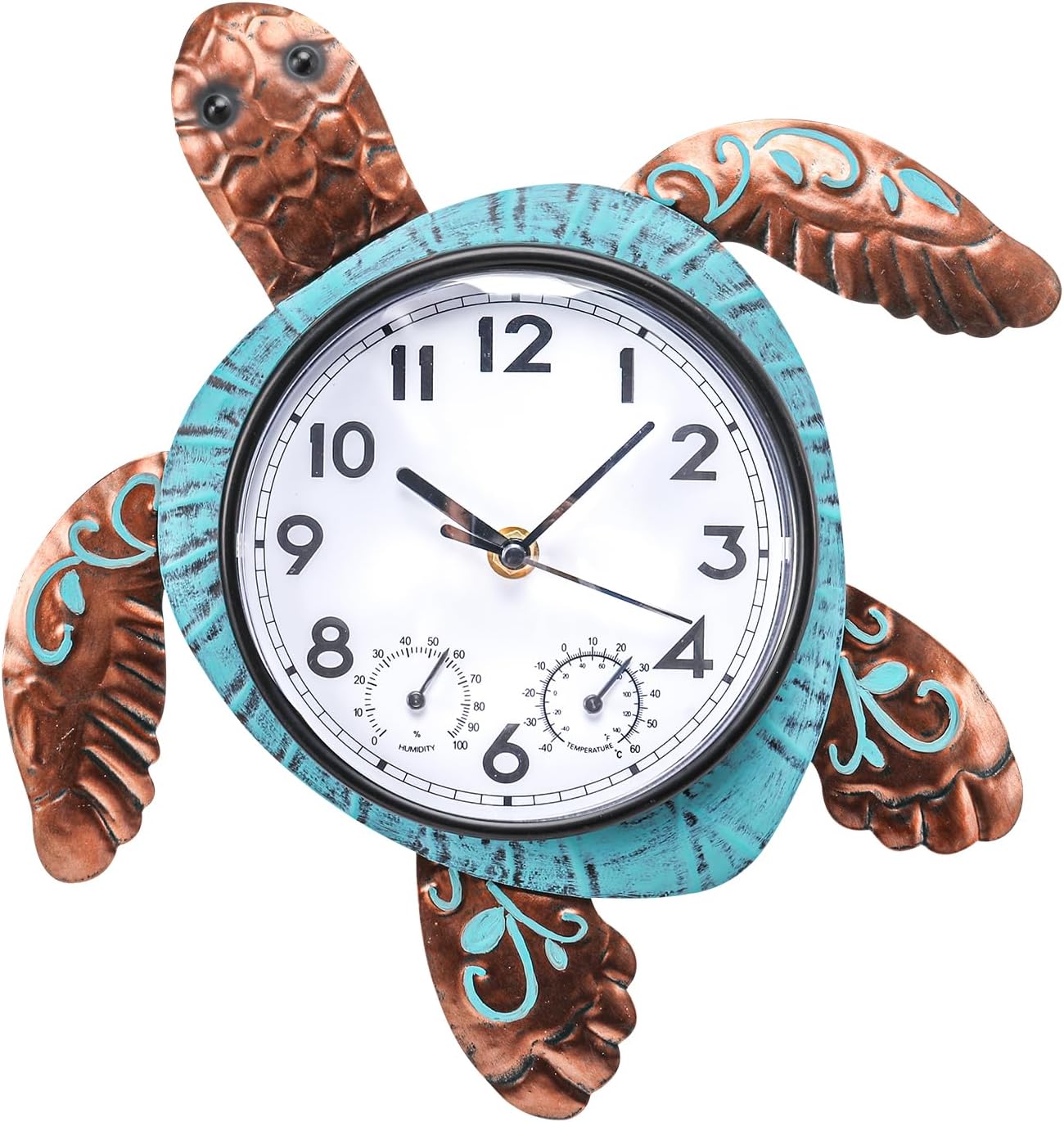
Turtle Outdoor Clock Waterproof for Patio Pool Garden Home
Reads as garden decor first, so it earns a focal spot on a shed or fence; shaped case is memorable
Novelty shape divides opinion and usually costs dial clarity; no size given in the name
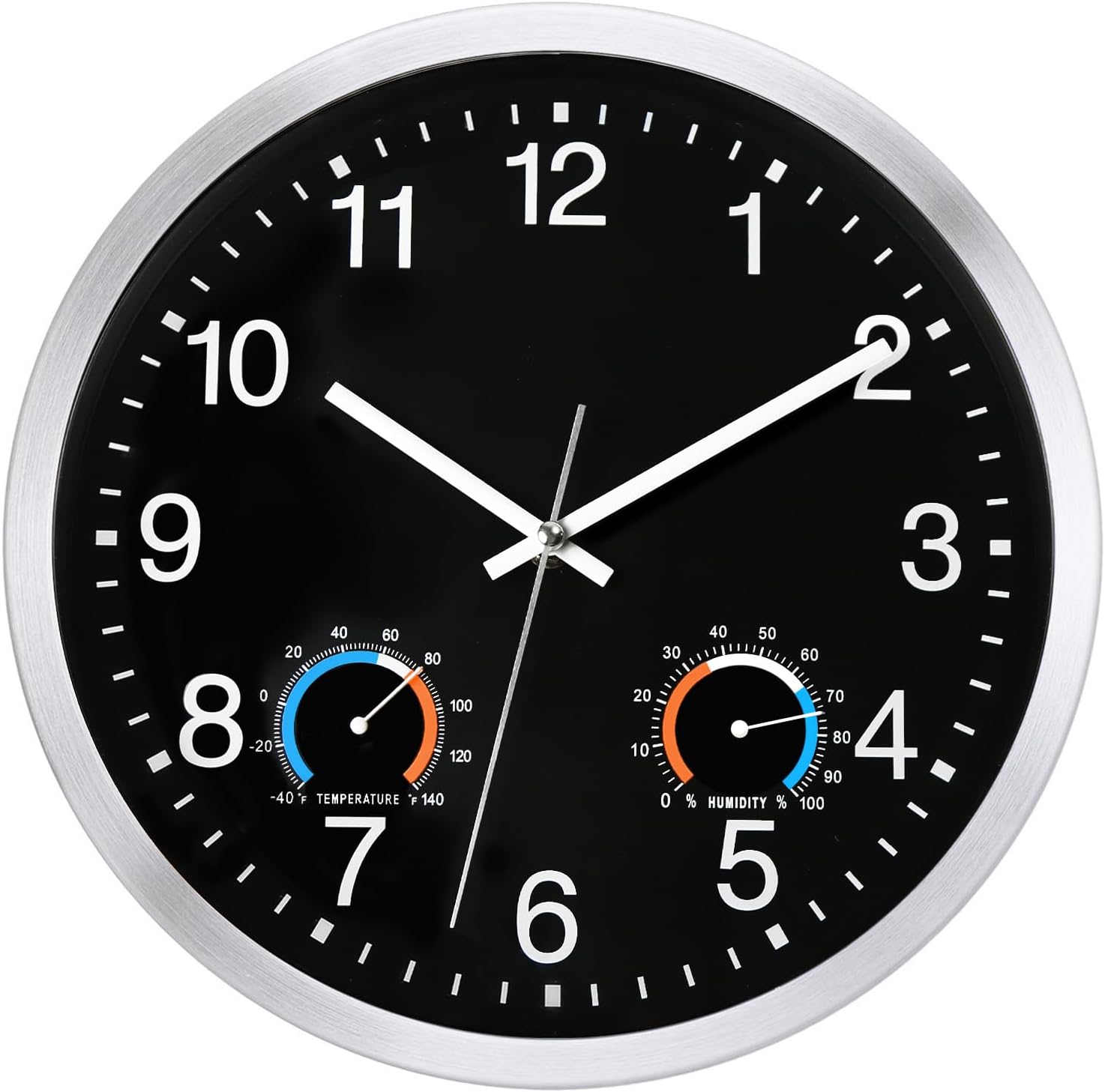
Caysie 12 Inch Outdoor Clocks Waterproof with Thermometer Combo, Black
Largest face of the four, so it stays readable at distance; black works against brick, siding, and fence
Top of this group's price range; plainest styling of the set

Outdoor Clock with Thermometer and Hygrometer Combo
Adds humidity to the temperature reading, which suits pool decks and covered porches
Name gives neither size nor finish, so the listing has to be checked closely; busiest face
Prices and availability may change.
What the product names tell you, and what they do not
These are four listings, not four clocks on a bench, and it is worth being straight about that. What follows is built from what each product says about itself, plus the things that decide whether an outdoor clock works in real weather. Nobody needs a lab report to know that a bigger dial reads better from across a deck, or that a novelty shape is a taste decision. Where a name is silent on something that matters, I say so, because silence in a listing is information too.
The names give away more than you would expect. The bronze clock lists its size (8 inch) and finish (bronze), then names four settings: patio, pool, bathroom, kitchen. That last pair matters, because a clock pitched at a bathroom and a kitchen is being sold as an indoor and outdoor crossover, which usually means a lighter housing than a piece built only for a fence. The Caysie clock also lists size and color, 12 inch and black, plus the thermometer. The turtle clock gives you a shape and a list of settings but no size. The thermometer and hygrometer model gives you neither size nor finish. Search top rated outdoor clocks and you will get a wall of five-star averages that say nothing about year two, which is why the missing details matter more than the stars.
Outdoor clocks size guide: why 8 inches and 12 inches feel so different
Size is the first decision, not the last, and it is where most buyers get this wrong. At three feet, an 8 inch dial is perfectly readable. At 20 feet, across a patio or from the far end of a pool, it is a smudge. A 12 inch dial buys you roughly half again the diameter, and that translates into a much larger readable face at distance. If the clock is going beside a back door that people walk past, 8 inches is plenty. If it is going on a fence, a shed wall, or the far side of a pool, go bigger.
There is a second size question that gets ignored: the wall itself. A 12 inch clock is a real object, about a foot across before you count any frame, and it will look lost on a blank two-story siding wall and oversized on a narrow strip of fence between two shrubs. Hold up a dinner plate, which is about 10.5 inches, where you plan to hang the clock. That is a fast, free way to run an outdoor clocks size guide before you order anything.
For outdoor clocks for patios specifically, think about the sight line from where people actually sit. A clock above the grill is read from two feet away by one person. A clock on the wall behind the seating is read by everyone. The second spot rewards a bigger dial.
Thermometer and hygrometer combos: useful or clutter
Three of these four clocks carry a thermometer, and one adds a hygrometer. Whether that earns its space depends on what you want from the wall. A thermometer beside a patio door is genuinely handy: you can look before deciding whether to bring a jacket out, and you save unlocking your phone with wet hands. A hygrometer, which reads humidity, is more of a specialist instrument. It is useful if the clock hangs near a pool, a hot tub, a greenhouse, or a covered porch where damp air and condensation are a daily topic. If none of that describes your setup, it is a dial you will stop reading after a week.
There is a trade-off in the face itself. Every extra dial competes with the hour markers, and small combo clocks get busy fast. The 8 inch bronze clock has the least room for extra instruments, so its thermometer takes a proportionally bigger bite out of the face. The 12 inch Caysie has room to spread out. The thermometer and hygrometer model crams in the most information, and its name does not say how large the face is, so that is the first spec to check. One honest caveat about all combo clocks: the thermometer reads the air right against the wall, in whatever sun or shade the wall gets. That is not the same as the air over the lawn. Treat it as a rough guide, not a weather station.
Waterproof claims and outdoor clocks installation
Waterproof is the word every listing uses and the word that means the least without a rating. Three of these clocks use it in the name. The fourth does not, which is not proof that it leaks; it just means the seller led with the hygrometer instead. Either way, waterproof on a patio clock usually means resistant to rain and splash, not submersible. No wall clock should be sitting in a puddle.
Placement does more for lifespan than any coating. Hang the clock under an eave, a porch roof, or a pergola beam if you can. That keeps direct rain off the case and slows the fade that eventually hits any finish in full sun. Avoid the spot where the roof dumps a river during a storm, and avoid the south-facing wall if you have a choice, because the same sun that keeps the clock visible will bake the finish and the hands.
Outdoor clocks installation is a fifteen-minute job with the right hardware and a nightmare with the wrong hardware. The clock needs to sit flat against the wall, so masonry wants a drill, a masonry bit, and proper anchors. Wood siding and fence boards take a screw directly, but predrill to avoid splitting and drive into a stud or a rail rather than the thin middle of a board. Vinyl siding is the awkward one: hook over the siding lip or use a mounting block rather than punching through the face. Whatever the wall, leave the top edge a little breathing room so water does not pool behind the case. And check the battery situation before you commit to a height, because a clock you need a ladder to reach is a clock whose battery will die for a month before you deal with it.
Build, finish, and how they age
The finish does two jobs: matching your decor and surviving the weather. Bronze and black are the forgiving choices. Bronze suits brick, timber, terracotta, and the general rustic palette, and it hides dust. Black is neutral enough for a modern fence and sharp enough to read against light siding. The turtle clock is the outlier, decor first and timekeeping second, and that is fine as long as you know it going in.
Two things age badly outdoors: plastics that chalk under UV, and printed numerals that fade. You cannot judge either from a product name, but you can read the outdoor clocks reviews on the listing and look for mentions of a second season rather than a first impression. Most reviews are written in week one. The useful ones mention winter.
How the clxeast vs lovely home essentials outdoor clocks lineup differs
Here is where the four actually separate, and this is the practical version of the clxeast vs lovely home essentials outdoor clocks decision.
The 8 inch bronze rustic clock is the crossover piece. Its listing names the patio, the pool, the bathroom, and the kitchen, and the vintage styling means it can move indoors without looking like patio furniture. It is the smallest dial here, so it wants a close-range wall: beside a door, over a sink, on a small porch. On a big open fence it will disappear. Visit on Amazon
The turtle clock is a garden ornament that tells time. The shaped case makes it a focal point on a shed wall, a garden fence, or beside a gate, and it is the one of the four that reads as deliberate decor rather than a utility dial. The trade-off is taste, since a shaped clock is a strong opinion and will not suit a formal patio. It also gives no size in the name, so confirm the dimensions. Visit on Amazon
The 12 inch Caysie clock is the legibility play. Twelve inches, black, thermometer included, and the simplest face of the group. If the clock will be read from a distance, this is the one that does the job. It also sits at the top of this group's price range and has the least character, so it is the right answer for function and the wrong answer if you wanted the wall to say something. Visit on Amazon
The thermometer and hygrometer combo is the information play. Humidity on top of the usual temperature reading makes it the pick for a pool deck, a hot tub surround, or a covered porch where damp air is a daily topic. Its name is the vaguest of the four on size and finish, so read the listing closely and check that the extra dials do not crowd the numerals at the size you choose. Visit on Amazon
Matching the clock to the spot
Most people arrive with a wall in mind rather than a product, so pair them the other way around. For a pool deck, prioritize a big dial and shade, and the 12 inch black clock covers both if you can hang it under a roof edge. If humidity is what you want to watch, the thermometer and hygrometer model earns its keep instead. For a garden fence or shed, the turtle is the fun answer and the 8 inch bronze is the subtle one. For a covered porch where you want a temperature read before stepping out, the bronze combo or the Caysie both work, with size deciding between them. For a bathroom or kitchen wall near a shower or sink, the bronze clock is the only one of the four whose listing explicitly pitches indoor rooms.
If you are new to this, how to choose outdoor clocks comes down to three questions: how far away will you stand when you read it, what does the wall already look like, and do you want extra dials at all. That is the outdoor clocks for beginners version, and it covers most of the decision.
What to verify before checkout
Confirm the actual diameter in inches and compare it to the plate test above. Confirm the finish name rather than trusting a photo, since bronze and black both render differently under studio lighting. Confirm what the thermometer measures and whether it is a separate dial or part of the main face. Confirm the battery type and how the case opens, because a sealed housing with a hidden compartment is a bad surprise on a ladder. And confirm the return window, especially on the novelty shape, which is the one most likely to look different in person than it did on screen.
Reading outdoor clocks reviews with a filter helps too. Skip the ones written the day the box arrived. Look for a winter, a battery change, or a second summer. That is where the useful signal lives.
The short version
If you want the clock read from across the patio, the 12 inch Caysie is the pick and the size is doing the work. If you want a clock that can move between a porch and a bathroom and still look intentional, the 8 inch bronze combo is the flexible choice, as long as the wall is close to where people sit. If you want the wall to be fun, the turtle earns its place. If you want to track humidity as well as temperature, the thermometer and hygrometer combo is the only one of the four that does it, and it sits in the middle of the group on price.
Use this outdoor clocks buying guide as a checklist and buy the size your wall actually needs rather than the one that photographs best. That single decision, more than any finish or extra dial, separates a clock you still read in three years from one you stop noticing by August.