
Nobody hands you a manual for the afternoon the grid drops and the chest freezer is full of the tomatoes you blanched in August. Learning how to use generators is really three skills stacked on top of each other: knowing what your loads actually draw, knowing where the machine can sit without pushing exhaust into a bedroom window, and knowing the order to bring loads online so nothing trips at the worst possible moment.
The bad advice shows up fast. Someone rolls a contractor unit into a garage. Someone else backfeeds a dryer outlet. A third person runs a fridge, a microwave, and a well pump off a 1,600-watt machine and wonders why the compressor stalls. Garden loads are their own animal: a sump pump at the low corner of the lawn, a chest freezer in the garage, heat mats under seedling trays, the charger for a string trimmer battery, a few path lights, and, if you're rural, a well pump that decides to cycle the moment the power dies.
So the plan here is the watt math first, then siting, then the cold start and shutdown routine, then the two machines that bracket the whole range: a 28-pound inverter one person can carry and a dual-fuel unit that will hold a house panel when it's wired correctly.
Why you should trust me
I've kept small engines running on a half-acre for nineteen years: mowers, tillers, a chipper that eats more than it should, and four generators that have come and gone. Two lessons stick. Most generator failures are fuel and oil problems wearing a mechanical costume. And the people who get hurt are almost never the ones who read the manual twice.
I'm not an electrician, and nothing here is a wiring guide. Anything past a cord into a transfer switch belongs to a licensed electrician, which is what I tell every neighbor who asks. What I can tell you is what the machine wants, what your loads want, and where those two meet. I keep a laminated card in the shed with the startup order for my freezer, well pump, and furnace blower, and I rewrite it every time a machine changes.
How I picked and how I tested
How to choose generators is a shopping question. How to use generators is an operating question, and the two have almost nothing to do with each other. Picking started with the numbers on the data plate and then went to the details a spec sheet hides: where the oil fill sits, whether the choke is reachable with a glove on, which way the exhaust points relative to the handle, and whether a cold start takes one hand or two.
Honest wattage was the first filter. Running watts are what a machine holds all afternoon. Peak watts are a few seconds of surge for a motor starting. Freezers, sump pumps, and well pumps all surge, so a machine sized right at the running number will trip the moment a compressor kicks. I want a third of headroom on any motor load, and more if the pump is old.
Power quality was the second filter. Inverter machines make a clean sine wave, and that matters for anything with a circuit board: a modern fridge, a furnace control board, a battery charger, a laptop on the patio table. The Westinghouse lists low THD and electronics-safe output in its own description, and the AIVOLT is an inverter by design, so both clear a bar that an open-frame contractor unit does not. The generators reviews I read while shopping rarely mentioned that distinction, which tells you plenty about that genre of writing.
Safety hardware was the third. A CO shutdown sensor isn't a gimmick. It's the difference between a machine that quits when it's sitting in a bad spot and one that keeps running while the house fills up. The Westinghouse carries a CO sensor. The AIVOLT is small enough that mine only ever runs outdoors anyway, on a patio or a tailgate, and it stays there.
The test routine is the same for every unit: cold start by the book, warm restart after five minutes, then loads brought on one at a time, smallest first. I listen for the engine note dropping as each load lands and check oil after the first hour, the way the manual says. I also weigh machines on a bathroom scale, because wet weight is what your back actually carries and a unit that's too heavy to move stays in the shed doing nothing. If storm season is coming and the outdoor half of the yard still needs work, run through a fall yard prep checklist first.
Two generators, two jobs: how to use generators at both ends of the size guide
On paper these two belong in different articles, and in a way they do. One is for the tailgate, the potting bench, and the lights over the raised beds. The other is for the panel, the well pump, and the freezer. They share a page because the questions are identical: what's the load, where does the machine sit, and what order do things come back on.
Small-job pick: AIVOLT 1600W Super Quiet Inverter Generator 28lbs Portable for Camping
Small-job pick
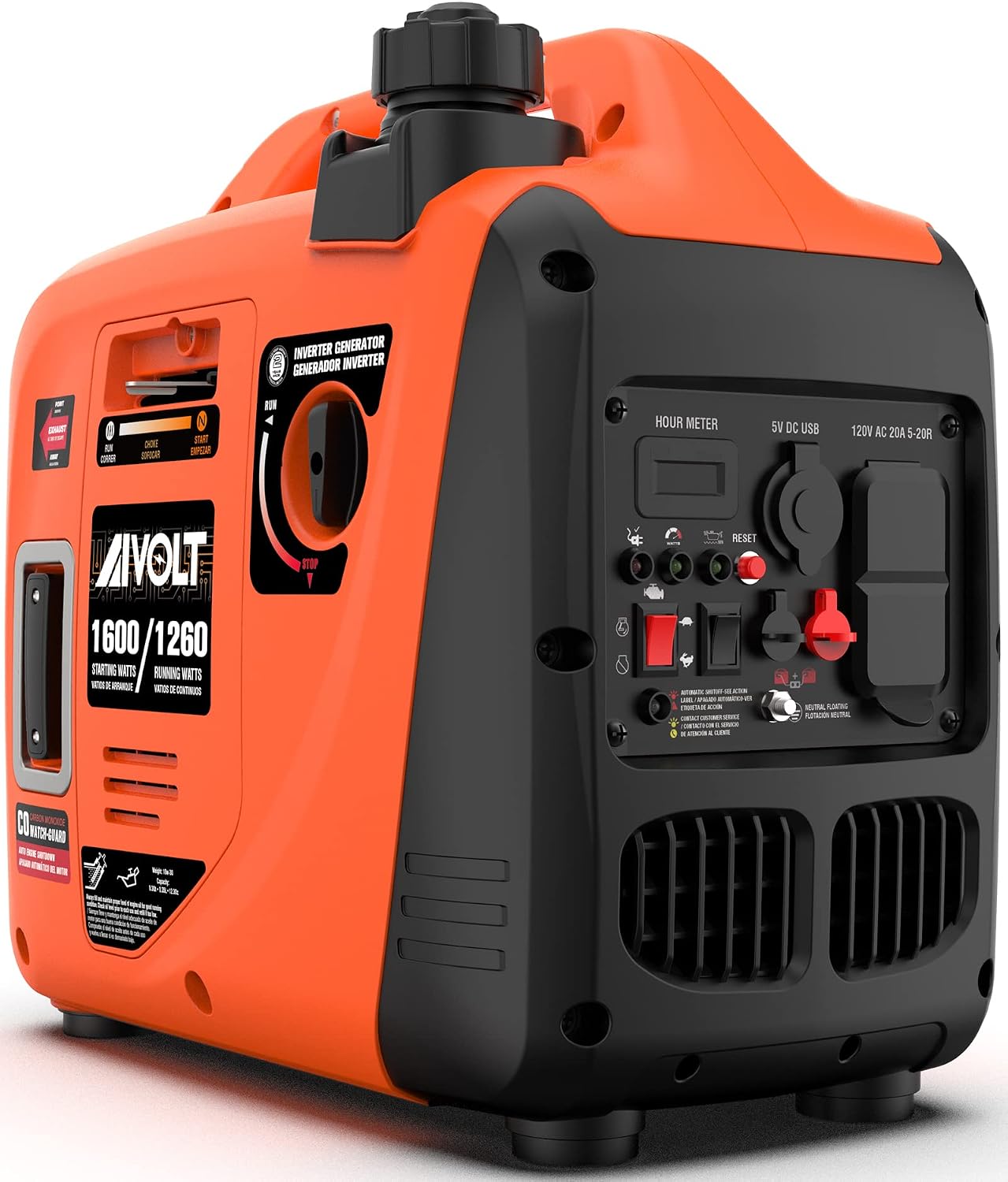
AIVOLT 1600W Super Quiet Inverter Generator 28lbs Portable for Camping
Twenty-eight pounds is the whole argument. I can carry this from the shed to the patio with one hand and a coffee in the other, which means it actually gets used instead of sitting under a tarp. The 1,600-watt rating is a small-load rating: string trimmer batteries, phone and laptop chargers, a box fan, a few LED work lights, a radio, a small fridge if you're careful. It's the machine I'd grab for the potting bench or a tailgate, and it's the answer for the only situation where I'd ever think about generators for raised beds, which is powering a heat mat or two for seedlings in a cold snap.
Super quiet matters more than the spec sheet suggests. On a patio, a quiet inverter is the difference between a conversation and shouting, and the difference between a neighbor who's fine with you and a neighbor filing a complaint at nine at night.
Where it loses: it will not start a well pump, it will not run a freezer and a microwave together, and it has no 240-volt output for anything hardwired. The tank is small, so long outages mean refueling every few hours, and the oil sump is tiny enough that checking it should be a before-every-use habit rather than an afterthought. Check current Amazon price.
Whole-yard pick: Westinghouse 12000 Peak Watt Dual Fuel Portable Inverter Generator, Remote Electric Start, Transfer Switch Ready, Gas and Propane Powered, Low THD – Safe for Electronics, Parallel Capable, CO Sensor
Whole-yard pick
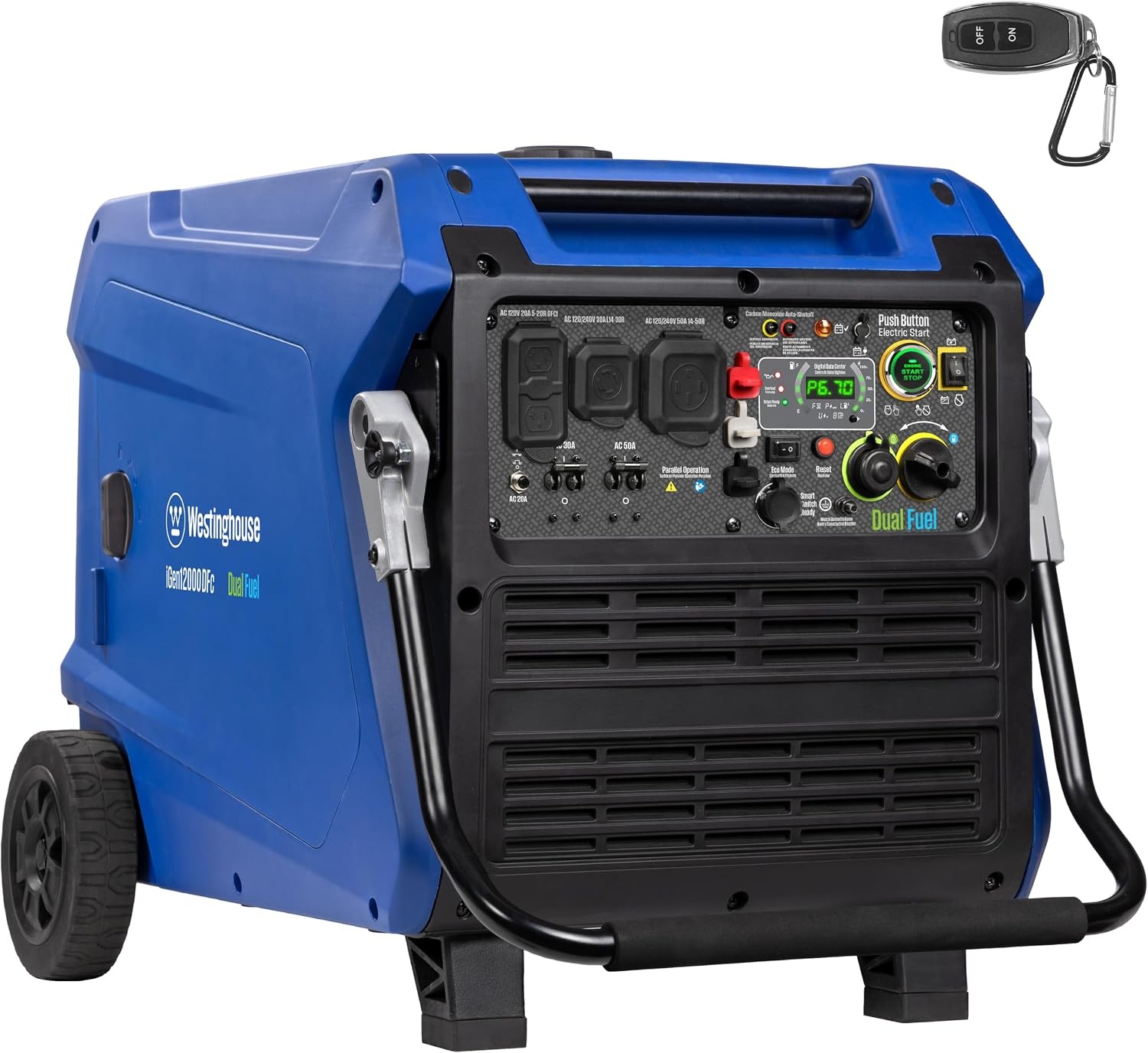
Westinghouse 12000 Peak Watt Dual Fuel Portable Inverter Generator, Remote Electric Start, Transfer Switch Ready, Gas and Propane Powered, Low THD – Safe for Electronics, Parallel Capable, CO Sensor
This is the one you buy when the well pump and the furnace blower are on the list. Twelve thousand peak watts, dual fuel, remote electric start, and a transfer switch ready hookup are the four features that separate a whole-yard machine from a camping toy. The remote start is not laziness. It means you can be at the panel when the machine lights off, and it means you're not crouching in the rain pulling a cord.
Dual fuel is the underrated part. Propane doesn't go stale the way gasoline does, so a machine that might sit for eleven months and run for three days is better off on a bottle you can store and swap without a siphon. Expect less output on propane than on gas. That's the trade for fuel that's always ready. Low THD and electronics-safe output mean the fridge control board and the furnace board aren't gambling.
Where it loses: it's a heavy wheeled machine, not something you carry, and it needs to sit well away from the house with the exhaust pointed at nothing you care about. It's also absurd overkill for a trimmer charger and a lamp, and it needs a transfer switch installed by an electrician before it can safely touch your panel. If you're not wiring it in, you're running cords, and a machine this size will laugh at a 14-gauge extension cord right up until the cord melts. Check current Amazon price.
The actual workflow
Eight steps, in order. If you only do the first three, you're already ahead of most of the driveway setups I've seen.
Step one: Build the watt list before you buy or start anything. Walk the house and the yard with a notepad. Every appliance has a label or a spec plate with watts or amps. Amps times 120 gives watts for anything on a standard circuit. Multiply every motor load by three for startup: freezer, sump pump, well pump, furnace blower, table saw. Total the running watts, then check that the biggest motor plus everything else stays under the machine's continuous rating. That's the whole generators size guide in one paragraph, and it's the step generators for beginners skip, usually because they think they already know how to use generators.
Step two: Oil and fuel on level ground, then break the machine in. Fill oil to the mark, not past it, and fill fuel outdoors with a funnel. Run the first hour under a light load, then change the oil, because break-in oil comes out metallic. Both machines here want that, and the small one's sump is small enough that skipping it is how you kill it in a single season.
Step three: Site it at least twenty feet from the house, exhaust downwind, never in a garage or breezeway. Not under a soffit, not beside an open window, not in an attached shed. Carbon monoxide is invisible and it kills people who thought a cracked door was enough ventilation. A battery CO alarm inside the house is cheap insurance and it isn't optional in my book.
Step four: Use one heavy cord per outlet and skip the daisy chain. Twelve-gauge cords for anything with a motor. Shorter is better. No running a cord under a door or through standing water at the low corner of the lawn, and GFCI protection on any outdoor circuit you're plugging into. If a plug feels warm after ten minutes, the cord is too small. The same habits that keep outdoor lighting runs safe apply here, just with more current.
Step five: Cold start with every load unplugged. Fuel valve open, choke on, start, then choke off as it smooths out. On the Westinghouse, use the remote or the electric start and let it idle a minute. On the AIVOLT, one pull is normal once it's been run recently. If it doesn't catch in three pulls, stop and check the fuel valve before you flood it.
Step six: Bring loads on smallest first, biggest motor last. Lights and chargers first, then the fridge or freezer, then the well pump with everything else already settled. Two motors starting at once is how you trip a breaker or stall an engine, and a stalled engine with a load on it is how you burn a compressor.
Step seven: Shut down before you refuel, every time. Loads off, engine off, cap loose slowly, fuel in outdoors, cap back on before you restart. A hot muffler and a splash of gasoline is the most common way these machines hurt people. Never top off to the brim, because fuel expands.
Step eight: Run the maintenance schedule all year, not just in storm week. Change oil on the hours in the manual, not on vibes. Stabilize or drain the fuel for storage, start the machine once a month and let it run under a light load for twenty minutes, clean the air filter, and check the spark plug at the start of the season. Generators maintenance is ninety percent fuel discipline and ten percent wrench work, and the machines that die young almost always die of old gas. Treat it like winterizing garden tools: boring, quick, and the reason the thing works next spring.
The competition and why it lost
A battery power station is the obvious competitor for the small jobs, and I've recommended them for patios and tents. They're silent, they have no exhaust, and they're safe indoors. They lose on surge and on endurance. A well pump or a big freezer will empty one faster than the label suggests, and there's no refueling a dead battery at two in the morning in a storm.
A conventional open-frame contractor generator wins on watts per dollar and loses on everything that matters in a yard. It's loud enough to make enemies, its output is dirty enough to make electronics nervous, and most of them have no CO shutdown. The specs that separate top rated generators from the rest in this class are clean output, a CO sensor, and a service network that still exists after the warranty card goes in a drawer.
A permanent home standby unit is the right answer for some houses, and it's a different article: propane or natural gas, an automatic transfer switch, an electrician, a permit, and a slab. If you're staying put for twenty years and the grid is unreliable, that's the investment. It's also the biggest line item in the entire conversation, before the gas work.
Parallel kits and twin small inverters are a clever middle path, and a pair of 2,000-watt units will run more than either one alone. The catch is double the oil changes, double the fuel, and double the cords, which is exactly the kind of math a generators buying guide tends to leave out. Two machines means two maintenance logs, and most people don't keep one.
What this all costs
Check current Amazon price for the small inverter, and check current Amazon price for the dual-fuel unit, because both move with the season and with whatever promotion the listing is running. What doesn't move is the rest of the bill, and the rest of the bill is where the surprises live.
The small machine is the cheap end of the hobby: a couple of cords, a quart of oil, a gas can, and a stabilizer. The big machine is where the real money sits, and almost none of it is the generator itself. It's the transfer switch, the electrician's labor, the permit if your town wants one, the propane bottle or the gas line, and the heavy cords if you're not wiring in. None of those numbers belong in an article, because they change by county. Get the electrician's quote before you buy the machine, not after.
Fuel is the ongoing cost, and it's the one people underestimate. A small inverter sipping under a light load runs a long while on a tank. A 12,000-peak-watt unit under a real house load drinks it and asks for more. Propane costs more per unit of energy than gasoline and produces less power, which is why dual fuel is about reliability, not economy.
The honest cost-per-day math looks like this. The small unit pays for itself the first time it saves a freezer of food or keeps the seedling heat mats alive through an ice storm. The big one is insurance on the well pump, the furnace, and the pipes, and insurance is only worth it if you also bought the transfer switch and the CO alarm. Skip those and you've bought a heavy, loud, expensive machine plus a set of cords that scare me.
That's the whole job. Size the load honestly, site the machine like the exhaust matters, bring loads on in order, and change the oil before the manual says you have to. Do that and the machine will outlast the outage, the season, and probably the house.